

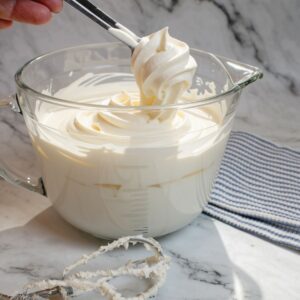

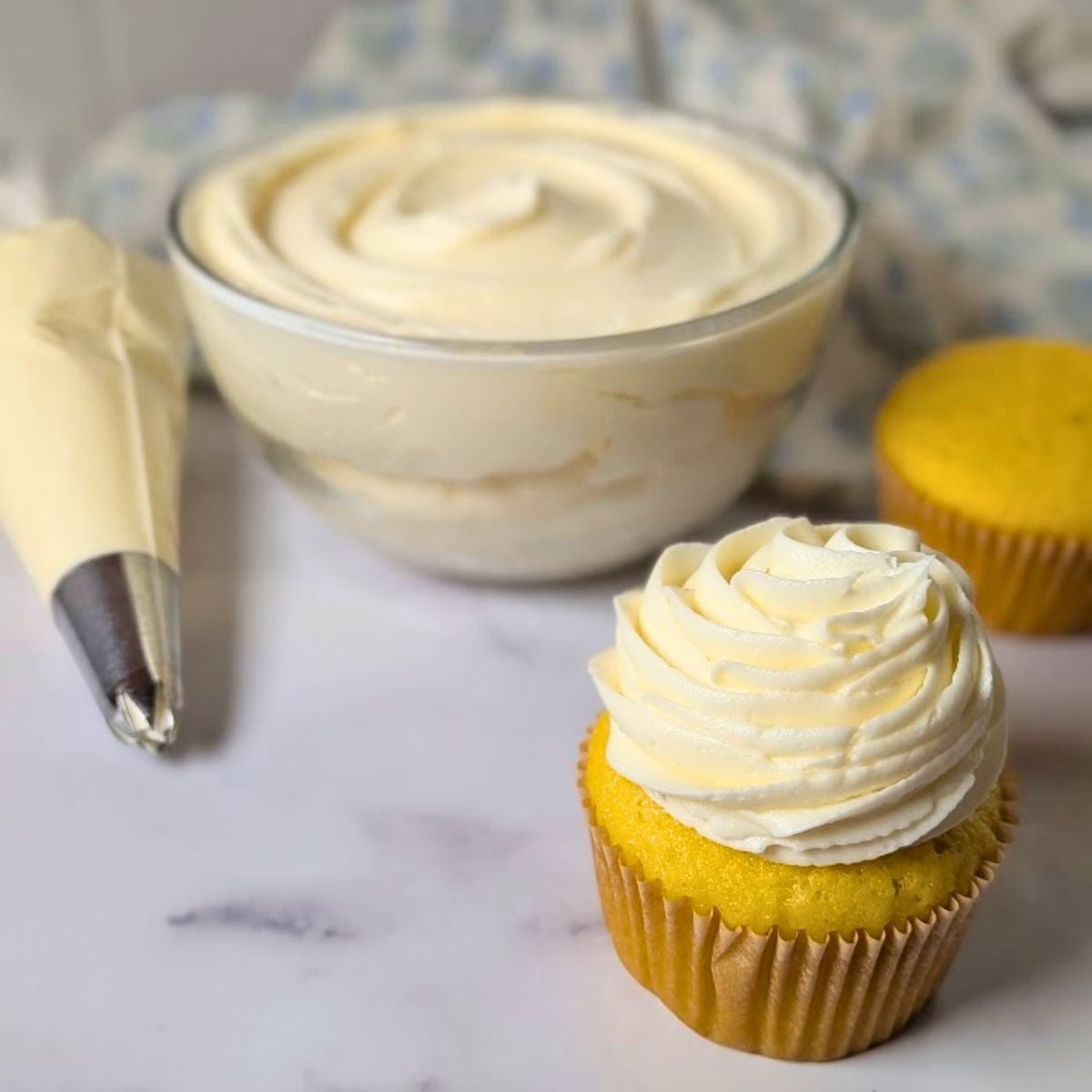
This American buttercream frosting recipe is velvety smooth and easy to make. It's a little less sweet than most traditional American buttercream recipes, and pairs perfectly with my Vanilla Cupcakes.
Why You’ll Love This Recipe
- It’s thick and smooth. This frosting has enough body for piping and cake decorating without feeling stiff.
- It’s beginner-friendly. The method is simple, and it’s easy to adjust the consistency if you need to.
- It uses basic ingredients. All you need is butter, powdered sugar, vanilla, whole milk, and a pinch of salt.
What Is American Buttercream?
American buttercream is a classic frosting made with simple ingredients. A combination of butter, powdered sugar, vanilla, and a little milk is all you need. You don’t need to cook a sugar syrup or whip egg whites like you would for Swiss meringue or Italian meringue buttercream. It’s one of the easiest buttercream recipes to learn, which is why it’s such a good choice for cupcakes and basic cake decorating.
Ingredients You’ll Need
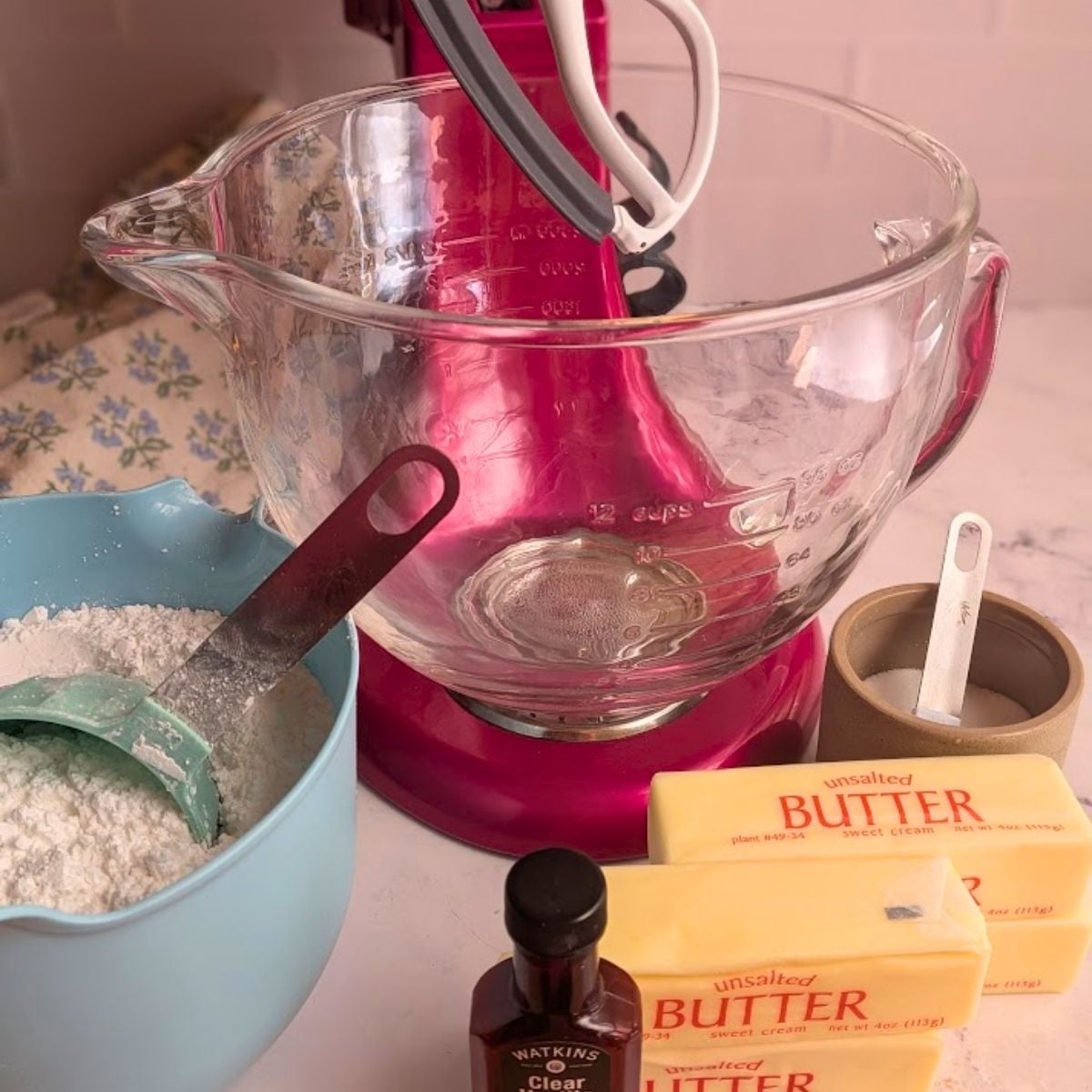
Butter — I use unsalted butter because it gives me more control over the flavor, but salted butter works too. If you use salted butter, simply leave out the added salt. Be sure to start with room temperature butter for the best results.
Powdered sugar — The brand can affect the flavor more than you might expect. Some bakers notice a starchy or slightly soapy taste with certain brands, so if your buttercream tastes off even though your ingredients are fresh, try switching brands of confectioner’s sugar .
Vanilla — If you’re a vanilla purist, use pure vanilla extract. If you want a whiter frosting, clear vanilla is a good option and keeps the buttercream from picking up as much color.
Whole milk — You only need a small amount to adjust the consistency. Start with less and add more only if the frosting needs it.
Salt — Add a pinch if you’re using unsalted butter. If you’re using salted butter, you can leave it out.
The Secret to Smooth American Buttercream
There are two techniques I use to get American buttercream thick, smooth, and easy to work with.
Beat the Butter First
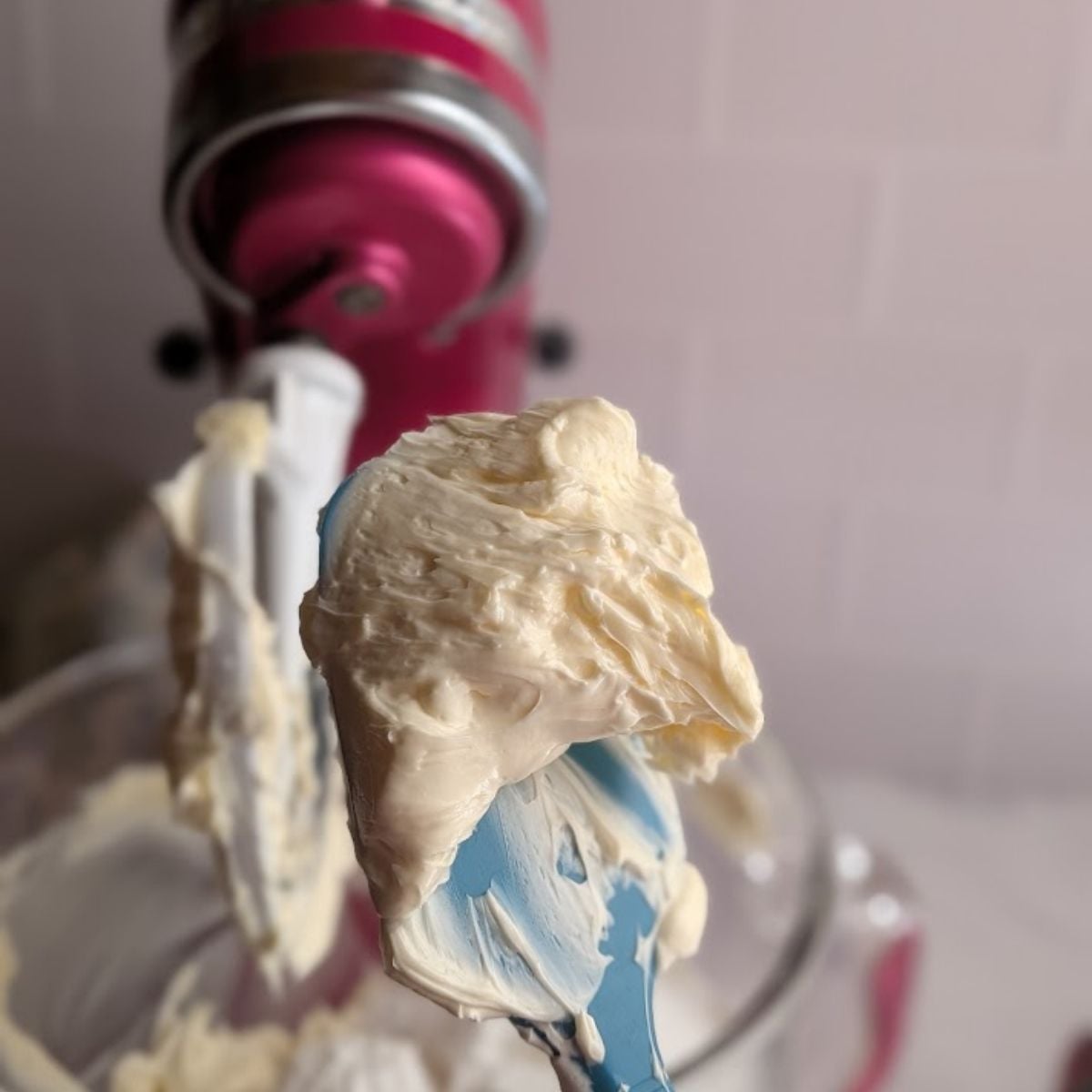
Start with softened butter and beat it with the paddle attachment for about 5 minutes. You’re looking for the butter to become lighter in color and very smooth before you add the powdered sugar.
This step gives you a much better starting texture and helps the frosting taste lighter and creamier. Stop the mixer a few times and scrape the sides and bottom of the bowl so all of the butter gets evenly mixed.
Be sure to check out the video in the recipe card below so you can see what the butter should look like before you move on to the next step.
Use an Immersion Blender to Remove Air Bubbles
Even a well-mixed buttercream can trap tiny air bubbles. If you want an extra-smooth finish, an immersion blender is one of my favorite tricks.
Keep the blender head completely submerged in the finished buttercream and move it slowly through the frosting. Don’t lift the blender toward the surface while it’s running because that can pull more air into the mixture.
This step is optional, but helpful if you’re smoothing the sides of a cake or want really clean piping.
Which Mixer Should You Use?
I prefer a stand mixer fitted with the paddle attachment for American buttercream. The paddle mixes the frosting well without adding as much extra air as a whisk attachment.
A hand mixer will work too. If you’re using one, stop often and scrape the sides and bottom of the bowl so the butter and powdered sugar mix evenly.
How to Get the Right Buttercream Consistency
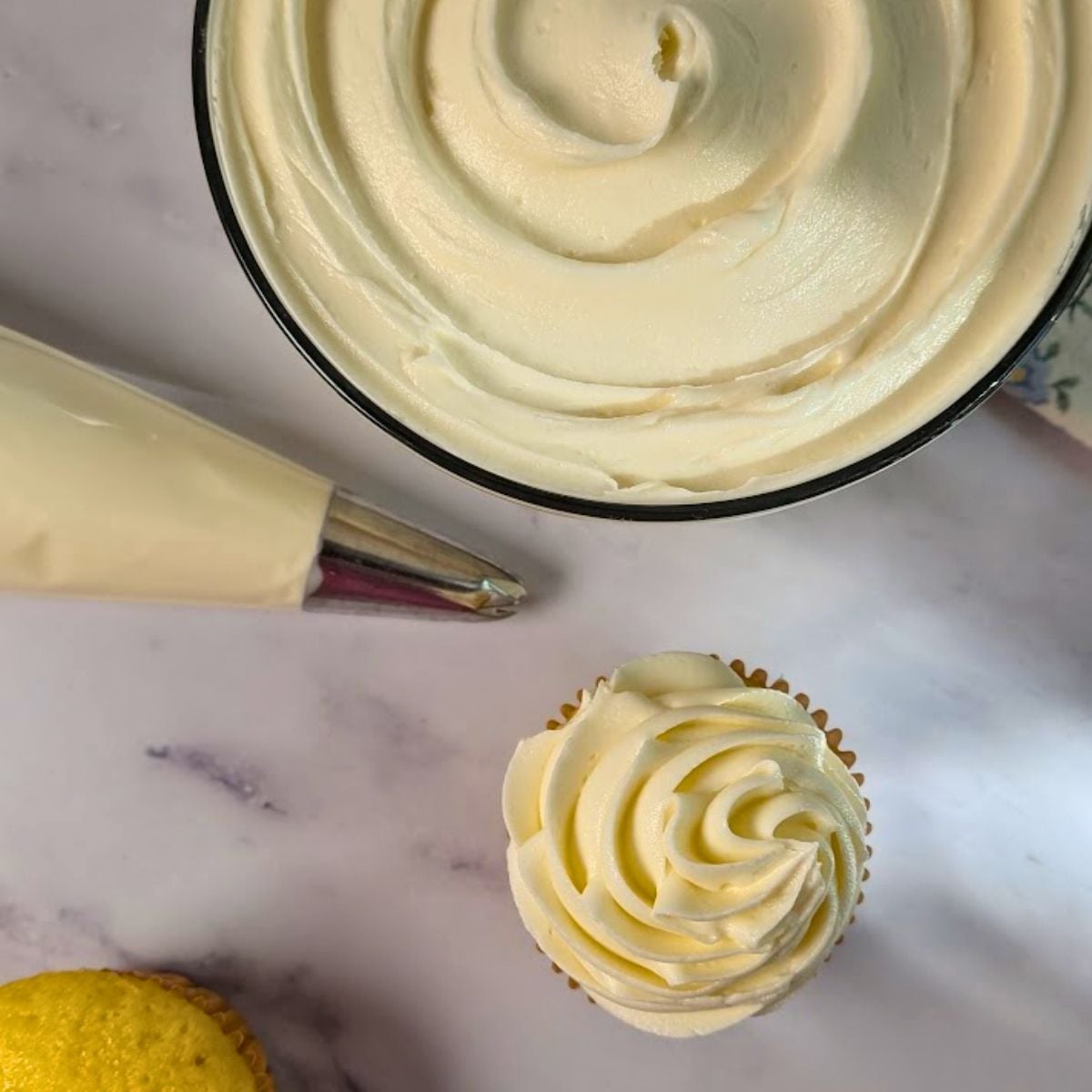
Consistency is one of the biggest things new bakers worry about, but this frosting is pretty forgiving. You’re looking for buttercream that is thick enough to hold its shape but still smooth enough to spread easily.
Start with 1 tablespoon of whole milk. If the frosting is still too stiff, add more milk a teaspoon at a time until it reaches the consistency you want.
It’s much easier to thin buttercream than it is to fix frosting that has become too loose.
Is This American Buttercream Recipe Very Sweet?
Yes, American buttercream is sweeter than Swiss meringue buttercream and French buttercream, but the ratio of butter to powdered sugar makes a big difference.
This recipe uses 5 cups of powdered sugar for 4 sticks of butter, which is less sugar than many traditional American buttercream recipes. That gives the frosting a softer texture and lets more of the butter and vanilla flavor come through.
If you’re looking for a frosting that’s less sweet, try my Ermine Frosting Recipe. It has a smooth, light texture and uses a cooked flour base instead of powdered sugar.
How to Color American Buttercream
Coloring American buttercream is easy if you keep a few things in mind.
- Use gel food coloring. Gel gives you stronger color without adding a lot of extra liquid to the frosting.
- Start with a small amount. Add a little color at a time and mix well before deciding whether you need more.
- Let deep colors rest. Buttercream colors often deepen as they sit, so give the frosting a little time before adding more gel.
If you want a bright white buttercream, clear vanilla can also help keep the frosting from taking on the light tan color that comes from pure vanilla extract.
How to Store American Buttercream
American buttercream is easy to make ahead, which is helpful if you’re preparing for a large order, party, wedding, or market.
Transfer the finished buttercream to an airtight container and store at room temperature for up to 48 hours.
You can also refrigerate this frosting until you’re ready to use it. Before decorating, let the frosting come back to room temperature, then mix it briefly on low speed until it becomes smooth again.
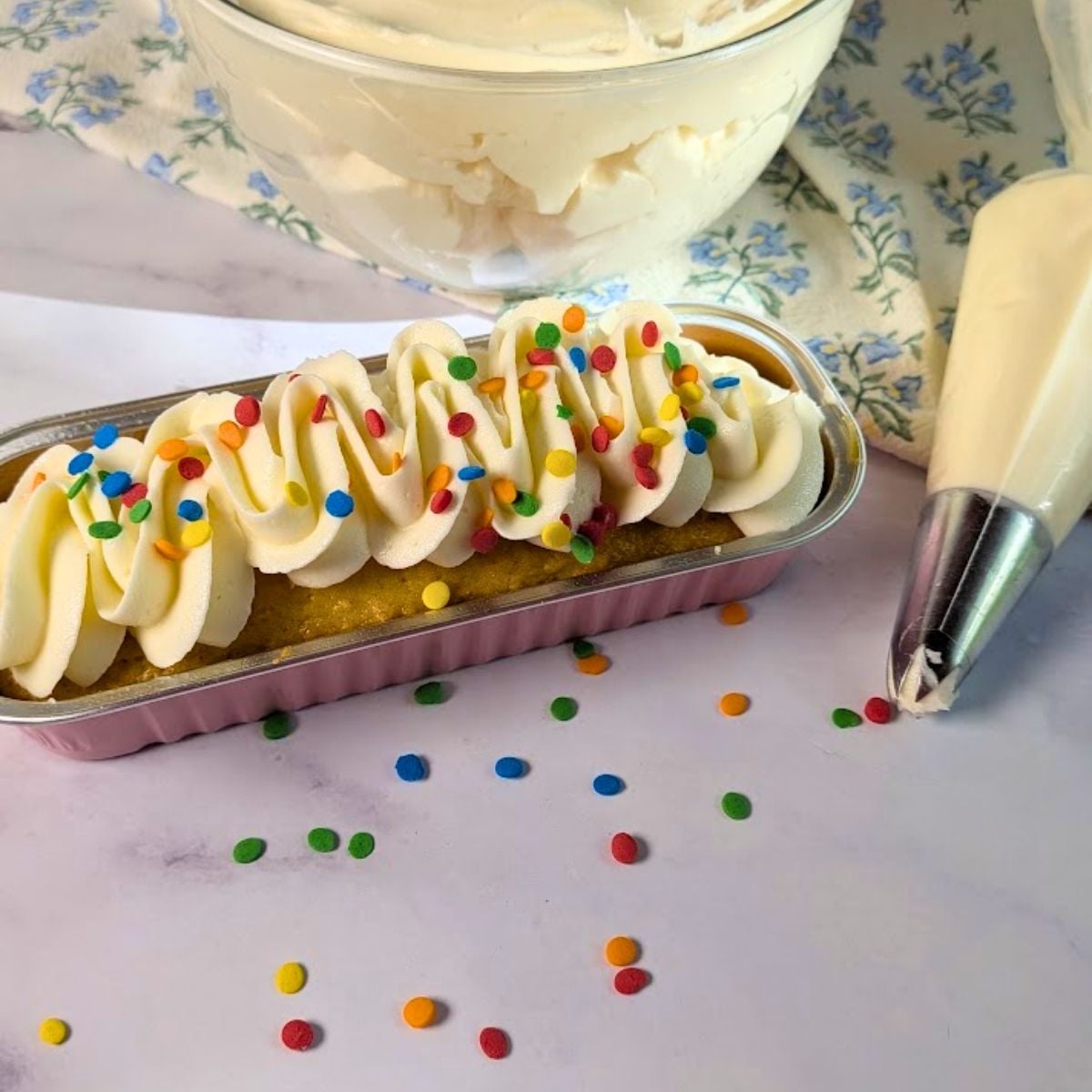
This frosting is perfect for decorating mini cakes too. I use my Easy Vanilla Cupcake and Mini Cake Recipe and this frosting for a delicious combination.
Can You Freeze American Buttercream?
If you have leftover frosting you can store it in an airtight container and freeze it until you need it. When you’re ready to use it, thaw it in the refrigerator overnight and then let it come back to room temperature.
Mix it briefly with the paddle attachment until it becomes smooth again. If you see air bubbles after mixing, you can use the immersion blender trick before you start decorating.
Troubleshooting American Buttercream
My Buttercream Is Too Stiff
If the frosting is too stiff to spread or pipe comfortably, add whole milk one teaspoon at a time. Mix after each addition and check the consistency before adding more.
My Buttercream Is Too Soft
If your buttercream is too soft, check the temperature before adding a lot of extra powdered sugar. The butter may simply be too warm.
Put the frosting in the fridge for 45 minutes, then mix it again. If it still needs more thickness, add powdered sugar in small amounts until you reach the consistency you want.
My Buttercream Has Air Bubbles
Air bubbles usually come from mixing too much air into the frosting. You can mix the buttercream on low speed with the paddle attachment, but for an really smooth finish, use an immersion blender to knock out the extra bubbles.
My Buttercream Tastes Too Sweet
American buttercream will always be sweeter than frostings such as Swiss meringue or ermine frosting. This recipe already uses less powdered sugar than many traditional versions.
If you prefer a much less-sweet frosting, my Ermine Frosting Recipe is a better choice.
Easy American Buttercream Frosting Recipe
Ingredients
- 4 sticks unsalted butter softened (454 g)
- 5 cups powdered sugar 565 g
- 1 teaspoon pure vanilla extract or clear vanilla
- 1 to 2 tablespoons whole milk
- ½ teaspoon salt Omit if using salted butter
Instructions
- Place the softened butter in the bowl of a stand mixer fitted with the paddle attachment. Beat on medium-high speed for about 5 minutes, stopping several times to scrape the sides and bottom of the bowl. The butter should become smooth, creamy, and noticeably lighter in color.
- Add the powdered sugar, vanilla, salt if using, and 1 tablespoon of whole milk. Start the mixer on low speed so the powdered sugar stays in the bowl. Mix until the ingredients are combined.
- The frosting should be thick, smooth, and able to hold its shape. If it feels too stiff, add the remaining milk one teaspoon at a time until you reach the consistency you want.
- For an extra-smooth buttercream, keep the head of an immersion blender completely submerged in the frosting and slowly work it through the buttercream until the larger air bubbles disappear.
- Use the frosting right away for cupcakes, mini cakes, layer cakes, or sheet cakes, or transfer it to an airtight container for storage.
Notes
Related Frosting Recipes and Tips
- My Favorite Shelf-Stable Buttercream Frosting Recipe
- How to Thicken Homemade Frosting in 5 Easy Steps
- Best KitchenAid Attachment for Making Frosting
- Easy Chocolate Buttercream Frosting Without Butter
- Best Buttercream Frosting for Decorating Cookies

Did you try this recipe?
I'd love to hear how it turned out! Leave a comment and a 5-star rating below if you enjoyed it. Your reviews help other bakers find my recipes, and I appreciate every one!
And if you share a photo on Instagram, tag @better_baker_club so I can see what you baked!


Leave a Reply