


Pricing baked goods can feel intimidating, especially when you’re just starting your home bakery. Between ingredient costs, labor costs, and overhead costs, it’s easy to feel unsure where to begin.
This guide walks you through the easiest way to calculate price your baked goods and earn good money from your baking business. It’s based on the same five-step system from my Pricing with Confidence Checklist, which has helped thousands of home bakers learn to price with purpose and confidence.
Why You’ll Love This Guide
This post will show you how to price your baked goods step by step, so you understand what goes into your numbers.
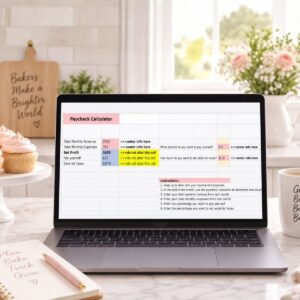
Once you learn the basic formula, you can grab my free pricing workbook to practice with your own recipes. Or, if you want to simplify the process, you can use a recipe pricing app like FoodShop. It lets you price your first three recipes for free, which makes it an easy way to test it out.
We’ll use a batch of cookies as the example so you can follow along easily and apply the same process to any recipe you sell.
The Story Behind This Post
When I started my small bakery from my home kitchen, I did what a lot of people do. I guessed at my prices and hoped for the best. But I was barely covering my cost of ingredients and didn’t even consider my labor costs at all.
After years of baking, testing, and teaching other home bakers, I created a simple five-step formula that works for every recipe. Whether you sell gourmet cookies, wedding cakes, or any bakery items, this system helps you set the right price every time.
How to Price Baked Goods Step by Step
Step 1: Convert Your Recipes to Weight
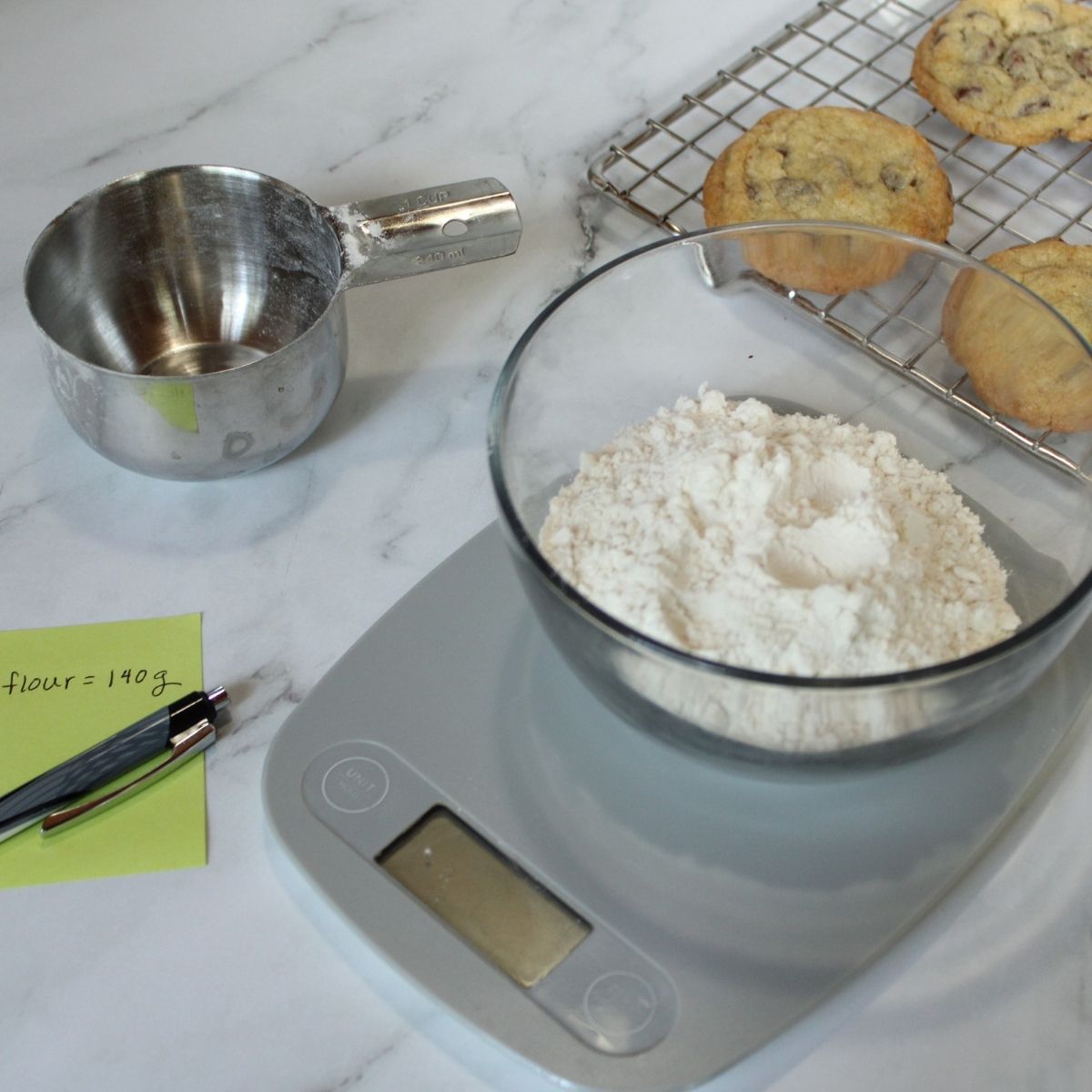
The first step is converting your recipe to weight. Cups and teaspoons work great for baking, but for pricing baked goods, you need to know the actual cost of your ingredients by weight.
Grab a digital kitchen scale and weigh each ingredient in your recipe as you make a test batch. Write down the weight in grams or ounces next to each ingredient.
Once you know the cost of your ingredients by weight, pricing becomes simple. We’ll use chocolate chip cookies as our example, but you can repeat these same steps for any recipe you sell.
Step 2: Calculate Your Recipe Cost
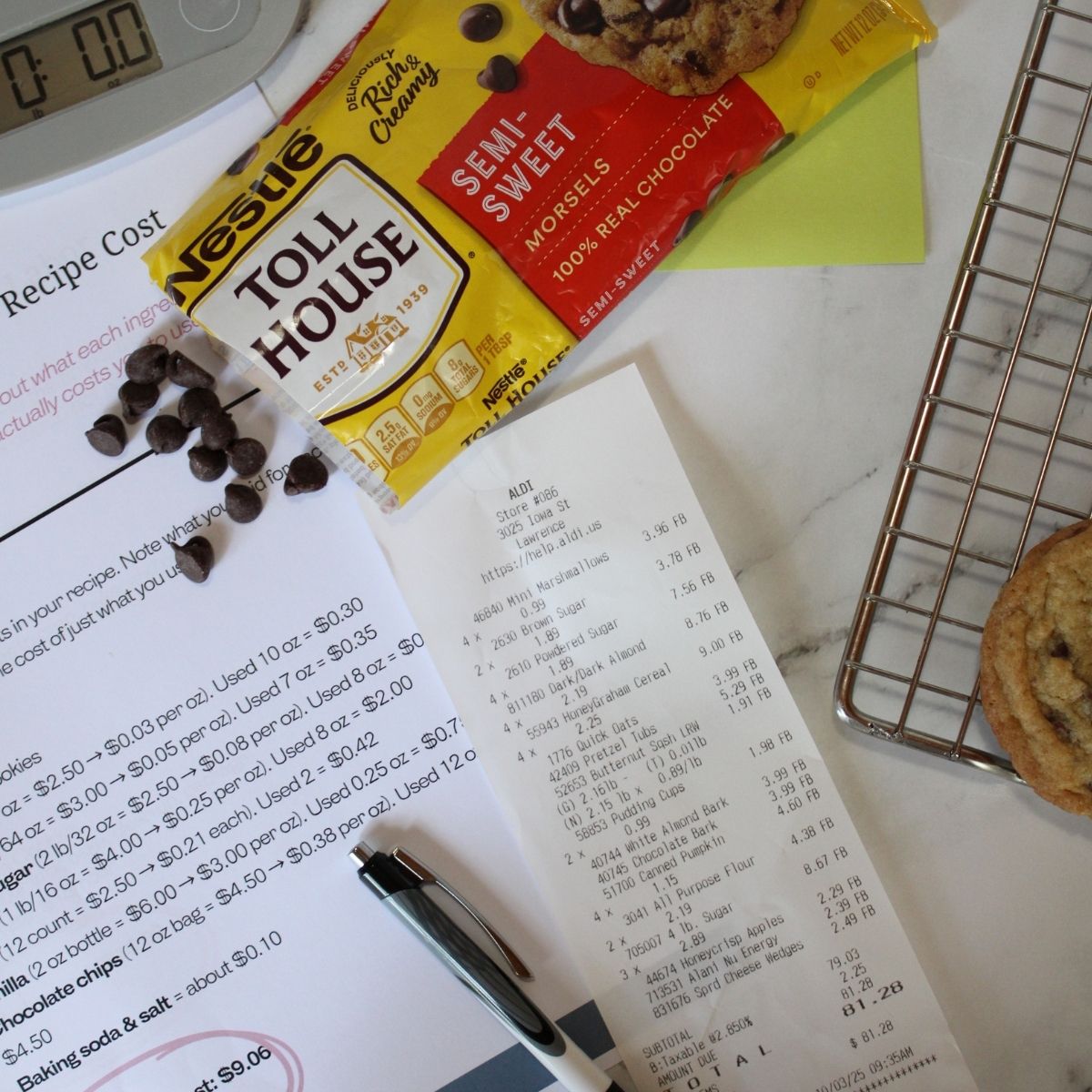
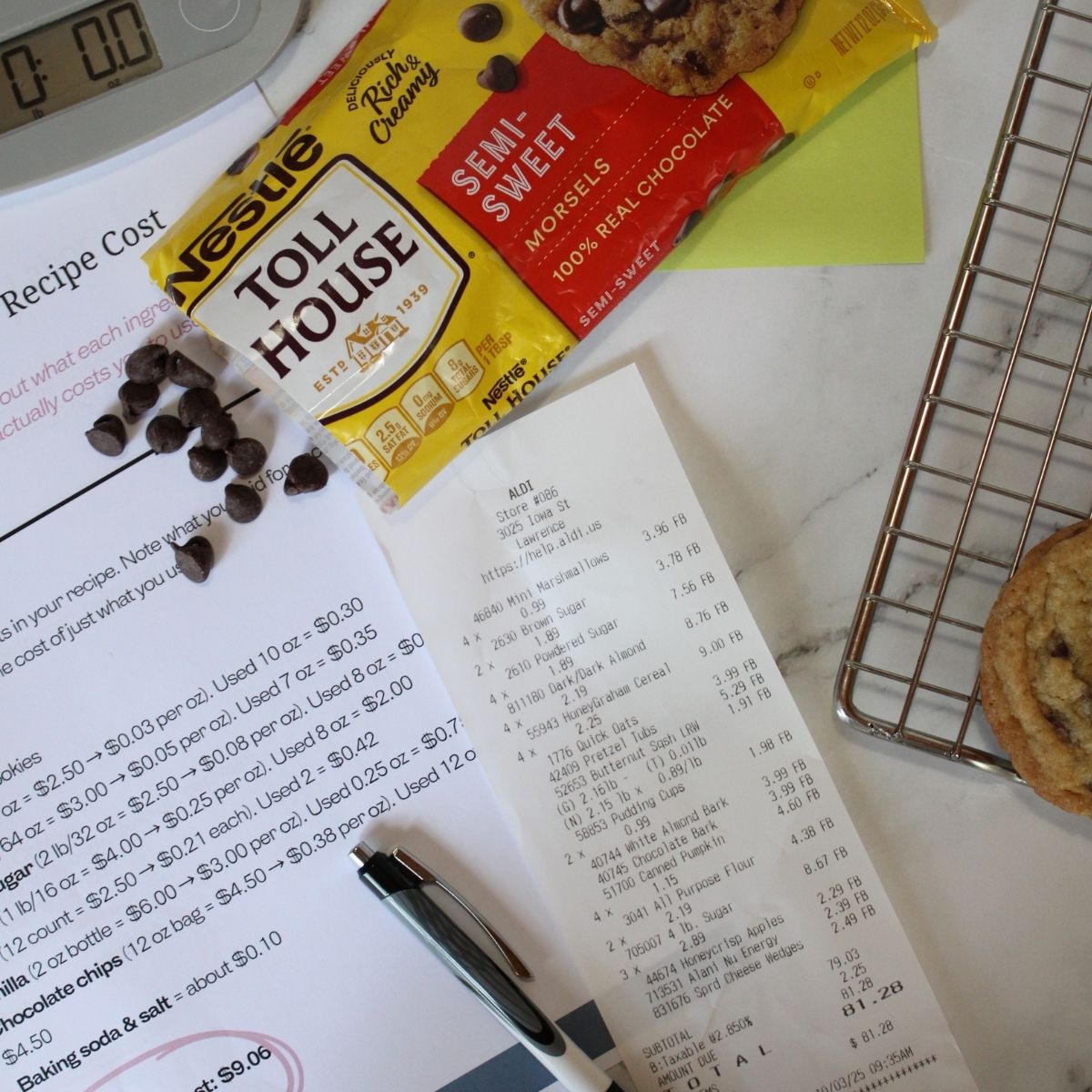
Now it’s time to find out what each ingredient actually costs to use. This is your cost of goods and it’s the foundation for profitable pricing. Write down all the ingredients in your cookie recipe, note what you paid for each package, and figure out the cost of just what you used.
For example, if a 5-pound bag of flour costs $2.50 and you used 10 ounces, that’s about $0.30 worth of flour. Do this for butter, sugar, eggs, and other ingredients.
Once you total everything, you’ll know your recipe cost. Understanding the cost of your ingredients helps you price baked goods accurately and see how much money each batch really costs to make.
Step 3: Add Your Labor
Next, you’ll add labor costs, or the time it takes to make your batch of cookies. Your time has value. Estimate how long it takes you to mix, bake, and package your cookies, then multiply by your hourly rate.
If you spend one hour and pay yourself $15 per hour, your direct labour costs are $15. For cake decorators or anyone making detailed custom bakes, factor in extra time for decorating or delivery. Including labor costs ensures your pricing covers more than just ingredients.
Step 4: Find Your Cost Per Item
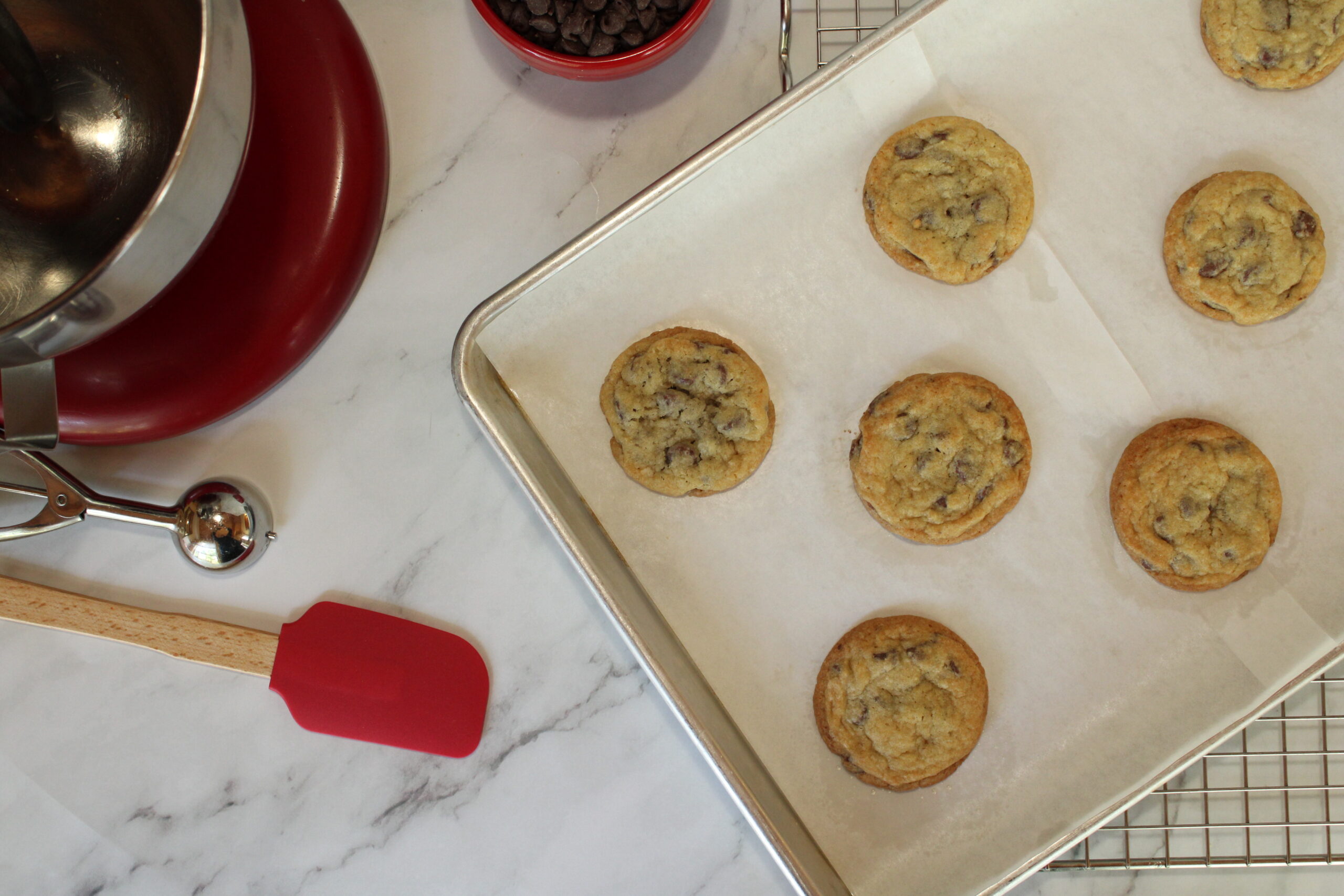
Now you’ll figure out what it costs to make one cookie. Add your ingredient costs and labor costs together, then divide by the number of cookies in your batch.
If your ingredient costs are $9.06 and your labor costs are $15, that’s a total of $24.06. If your recipe makes 24 cookies, divide $24.06 by 24 to get $1.00 per cookie.
This step helps you see how much each item really costs you to make. Once you know that number, you can use it to find your best price for other bakery products like cupcakes, loaves of bread, or special orders.
Step 5: Mark It Up for Profit
Once you know your total cost per item, it’s time to add profit.
This is where a lot of bakers get confused because markup and profit margin are not the same thing.
Markup is based on your cost.
Profit margin is based on your selling price.
For beginners, markup is usually the easiest place to start.
To use markup, multiply your cost by your markup percentage, then add that amount to your cost.
For example, if one cookie costs $0.66 to make and you add a 50% markup:
$0.66 × 50% = $0.33 profit
$0.66 cost + $0.33 profit = $0.99 selling price
So in this example, the cookie has a 50% markup.
But the profit margin is different. Since the cookie sells for $0.99 and the profit is $0.33, the profit margin is about 33%.
Most home bakers start by adding a markup somewhere between 25% and 50%, then adjust based on their market, recipe, time, packaging, and what customers are willing to pay.
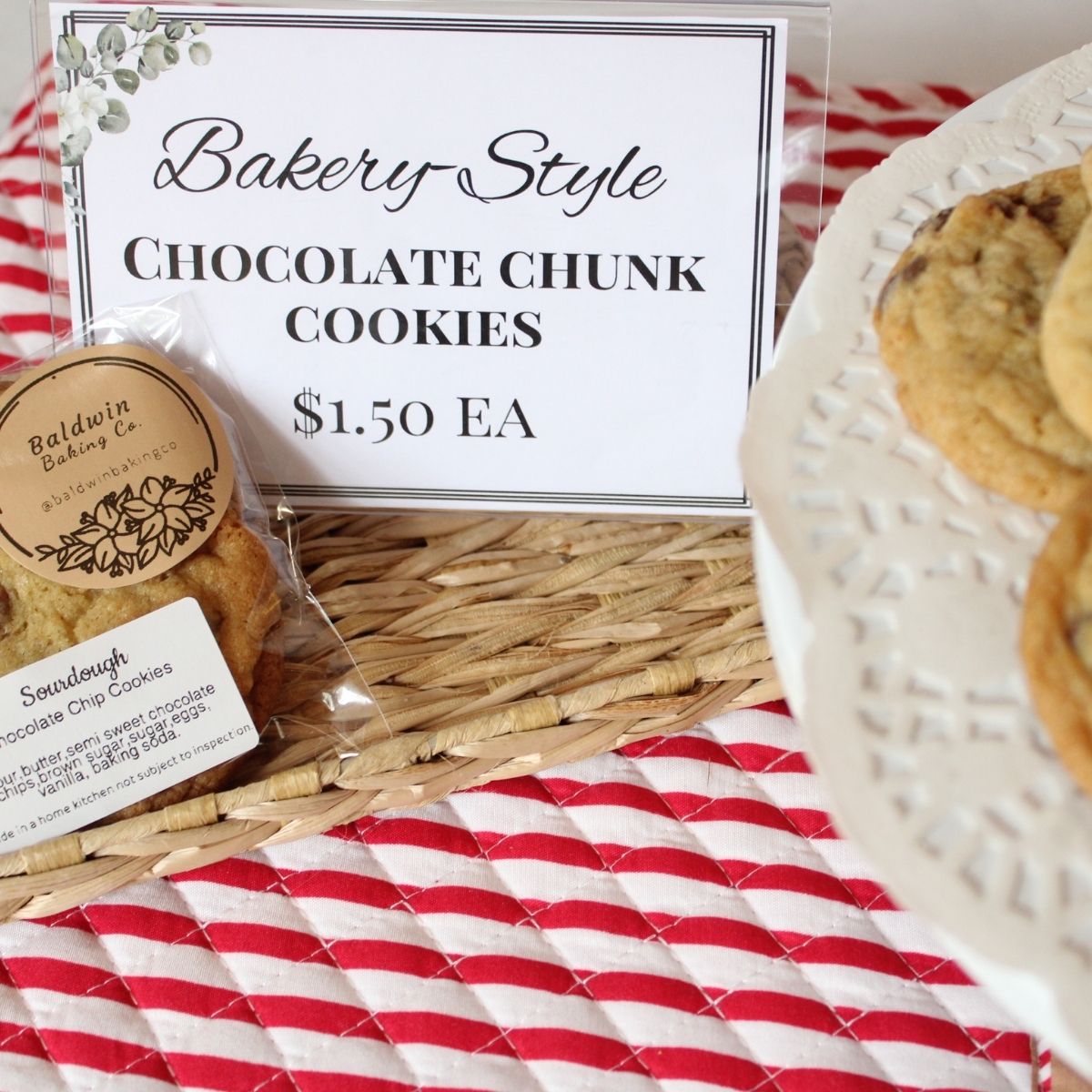
After you calculate your price, round it to a customer-friendly number. For example, you might round $0.99 to $1.00, or $1.30 to $1.50.
The goal is not just to cover your ingredients. Your price also needs to pay you for your time and leave room for profit.
Common Pricing Mistakes to Avoid
Copying other bakers, instead of knowing your cost of goods, is the recipe for burn-out. Ignoring overhead costs like packaging, labeling, or the cost of vending at an event can lead to undercharging.
Many home bakers underestimate how much time their work takes or skip profit altogether. Remember, your baking business is a valuable service and deserves the right price.
How to Use My Free Pricing Checklist
If you’d like extra help, download my free Pricing with Confidence Checklist. It walks you through all five steps with fill-in worksheets and examples using a batch of cookies.
You’ll learn how to track your ingredient costs, calculate your cost of goods, and find your desired profit margin. You can use the checklist to plan future price increases, add new products, or update your menu as your baking business grows.
FAQ About Pricing Baked Goods
What’s the easiest way to calculate my cost of goods? Weigh your ingredients and use your actual cost of ingredients, not estimates. Then add labour and overhead to find your total cost of goods.
What’s a good profit margin for home bakers? Most home bakers aim for a 25 to 50 percent desired profit margin, but custom cake and wedding cake decorators often go higher because of time and skill.
Should I include packaging or utilities in my pricing? Yes. Overhead costs like packaging, labels, and the cost of gas for your oven are all variable costs that belong in your final sale price.
How do I know if I’m charging too much? Compare your bakery products to similar items at local bakeries or farmer’s markets. As long as your pricing fits your target market, you’re in a good place.
Need More Help Pricing Your Baked Goods?
If you want to understand the pricing process step by step, grab my free pricing workbook. It walks you through the basic formula so you can feel more confident setting prices for your baked goods.
Want an easier way to price your recipes? I also recommend FoodShop, a recipe pricing app I use myself. I love how easy it makes pricing, recipe costing, menus, and orders.
I’m a FoodShop affiliate, which means I may earn a commission if you sign up through my link.
Cupcake Shenanigans says
Great Information!!
Autumn Ridley says
Hi in the example you used 8oz. of flour with price per unit being $0.03. Should the cost not be $0.24 if we are multiplying 8 by 0.03? I am confused on where $0.26 came from.
La Paloma Treats says
Great info- thanks so much for sharing!
Jorge Dussan says
Thank you for sharing. One question: where in the COGS do you include items such as equipment, utensil, etc. costs involved? And how do allocate them to your price unit? Lights on this will be much appreciated.
Sara MacKenzie says
Thanks. I just needed direction to get started. I'm going to make a go of it.
Sara MacKenzie says
@Autumn Ridley, divide $2.64 by 80 Oz = .033. So 80 X .033 = $2.64. Because there's a decimal, you write your total to the nearest cent. But, when you di the math, use your decimal. So .033 X 8 = .264, then round to nearest cent .26. 👌
Mal says
Thanks for the very informative post! Very helpful.
Cheryl Tosta says
Just want to learn to price
Angel L. Frost says
Profit Margin= 100*(sales price – COGS)/sale
What is the sale number at the end? Is it the number of products you sold?
Pamela says
Thank you so much for sharing this information to help us bakers!!! This is a valuable tool for me.
Ally says
Hi, great info! But I think there may be a miscalc in your markup? In your example: if your profit is $0.33 cents on a cookie that retails at $0.99 then your markup is only 33% ($0.33 divided by $0.99); not 50%. Your article has so much great info but just wanted to clarify this for anyone using the formula, that could be potentially setting their retail price too low 🙂
Jan says
I was trying to download your free guide, but it keeps wanting to charge me $9.
Better Baker says
Thanks for catching that! This has been fixed and the free guide is available again.
Better Baker says
Thank you for catching this! You’re right that $0.33 divided by the $0.99 selling price is the profit margin, which is about 33%.
The 50% number is the markup, because markup is based on the cost of the item. In this example, the cookie costs $0.66 to make, and $0.33 is 50% of that cost.
Markup and profit margin are so easy to mix up, so I updated the wording in the post to make that clearer. I really appreciate you pointing it out!
Better Baker says
Great question! In that formula, “sale” means the selling price, not the number of products sold.
A clearer way to write it is:
Profit Margin % = 100 × (Selling Price - COGS) ÷ Selling Price
So if a cookie sells for $3.00 and the COGS is $1.00, the profit margin would be:
100 × ($3.00 - $1.00) ÷ $3.00 = 66.7%
I’ll update the wording in the post to make that clearer. Thank you for asking!
Better Baker says
You’re in the right place! The free guide in this post will help you understand the basics.
I’m also an affiliate for FoodShop, a recipe pricing app I use myself and love because it makes pricing so much easier. You can check it out here: https://foodshop.biz?ref=allysongra-d49a