




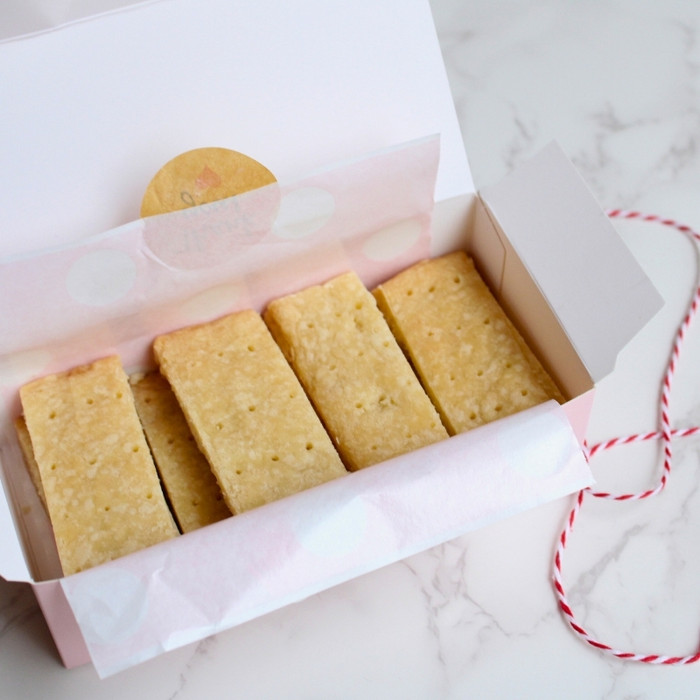
My homemade version of Walkers Scottish Shortbread Cookies is easy to make and impossible to resist.
Why You’ll Love This Recipe
- Classic buttery flavor
- Easy to make with a food processor, stand mixer, or electric mixer.
- Perfect for special occasions, holiday gifting, or afternoon tea.
- Stores beautifully in an airtight container.
Ingredients & Ingredient Tips
You only need a few simple ingredients to make this classic shortbread recipe, but each one makes a difference in the resulting shortbread texture and flavor.
For the Dough
- Unsalted European-style butter – I recommend using European-style butter for its higher fat content.
- White sugar– Traditional recipes use caster sugar (a finer granulated sugar) for a smooth texture, but white sugar works too.
- All-purpose flour – Don’t pack too much flour into your measuring cup. Use the spoon-and-level method for the most tender dough.
- Rice flour – Adding a few tablespoons of rice flour gives the cookies a delicate snap and that signature “sandy” mouthfeel.
- Pinch of salt – Just a small pinch of salt balances the sweetness and enhances the buttery flavor.
Tools You’ll Need
- Food processor or stand mixer – Either works well to cut butter evenly into flour.
- Rolling pin and bench scraper – For flattening and portioning the shortbread dough.
- Parchment paper– Keeps the cookies from sticking.
Two Ways to Bake Shortbread
There are two reliable methods for baking shortbread, and choosing the right one depends on the look you want. The first method is to roll the shortbread dough to about ½ inch thick, chill it, and cut it into your desired shapes before baking. This gives you neat, uniform cookies and works well if you’re using cookie cutters or making classic rounds.
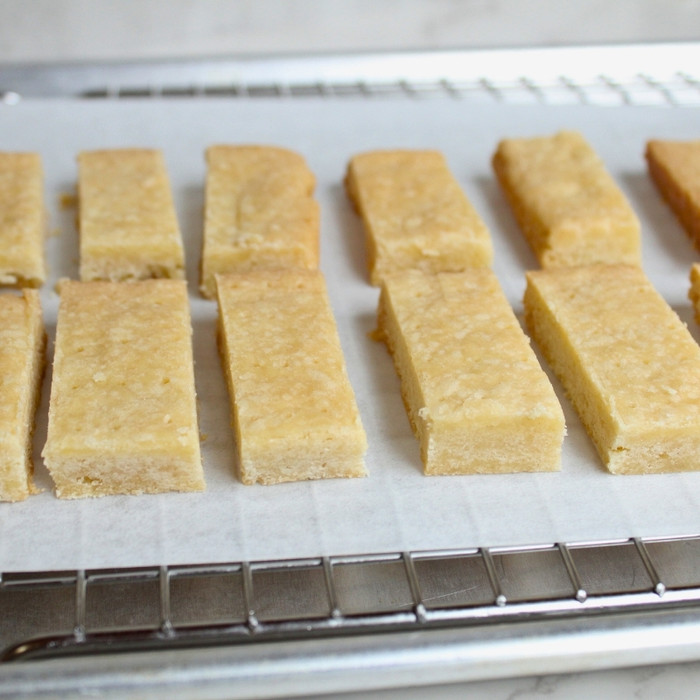
The second method is the one I prefer for an authentic Walkers-style finish. Press the dough evenly into your baking pan, chill it until it’s completely firm, and bake it as a single slab. Once it’s baked, let the shortbread cool fully so it can set up. Then remove it from the pan and slice it with a sharp knife. Cutting after it has cooled gives you the cleanest edges and that smooth top and tender, crumbly texture you expect from true Scottish shortbread biscuits.
How to Make Shortbread Cookies
Cream the Butter and Sugar
In a stand mixer or with an electric mixer on medium speed, cream the unsalted butter (let it soften just slightly to room temperature before mixing) and sugar for about 2 minutes. You’re looking for a smooth, cohesive mixture, not fluffy like cake batter. Overmixing will whip air into the butter and change the texture, so stop as soon as it’s evenly combined.
Add the Dry Ingredients
Sift together the flour, rice flour, and a pinch of salt. Add the dry ingredients gradually, mixing on low speed just until the cookie dough comes together. The dough should start to clump and hold when pressed, but still feel sandy and soft.
If you're using a food processor, pulse the mixture in short bursts until it resembles damp sand. Avoid running it continuously. The best shortbread has minimal mixing for that classic crumbly bite.
Press Into the Pan and Chill
Turn the dough out and bring it together gently with a bench scraper. Press the dough firmly and evenly into a 9x9 baking dish lined with parchment paper, keeping the thickness right around ½ inch. Take your time smoothing the top. This will help you get those clean, sharp edges later.
Add docking if you prefer. Docking with the tines of a fork before baking isn’t required in the bake-then-cut method, but it does give that classic traditional look.
Cover the pan with plastic wrap and chill for 30 to 45 minutes. Chilling is essential for helping the butter firm up so the shortbread bakes evenly.
Bake as a Slab
Preheat your oven to 325°F (160°C). Once the dough is fully chilled, remove the plastic wrap and bake the entire slab of shortbread right in the pan for 30 to 35 minutes. You’re looking for golden brown edges and a pale center. The low temperature keeps the shortbread tender and prevents overbrowning.
Let the pan cool on a rack, You’ll get a cleaner slice once the shortbread has cooled and set.
Cut Into Fingers or Wedges
Once the shortbread is completely cool, lift the slab out of the pan using the parchment paper overhang. Transfer it to a cutting board and slice it with a sharp knife into fingers, wedges, or petticoat tails.
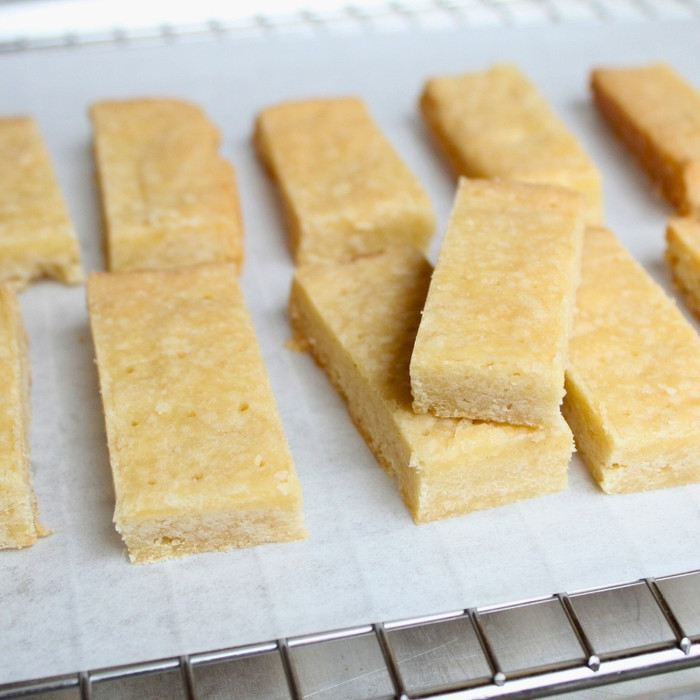
Because the shortbread is baked as one piece, the edges cut beautifully clean, and the tops stay perfectly smooth, just like the classic Walkers shortbread.
Allyson’s Tips for Best Results
- Line the pan well. Parchment paper with overhang makes removal easy and keeps the bottom perfectly smooth.
- Cut after cooling. This is my biggest tip for getting that authentic Walkers look. Warm shortbread tends to crumble at the edges, but cooled shortbread slices neatly.
- Use a long, sharp knife. Press straight down rather than sawing back and forth for the cleanest lines.
Storage & Make-Ahead Tips
- Room temperature: Store cooled shortbread in an airtight container layered with parchment paper for up to 1 week.
- Freezer: Wrap baked or unbaked dough tightly in cling wrap and freeze for up to 2 months. Thaw slightly before baking.
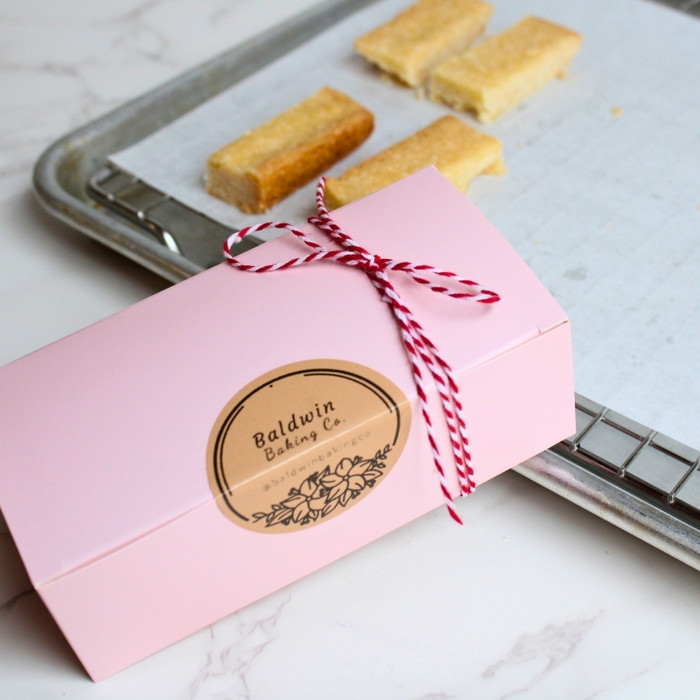
- Gift-giving: Slice into uniform fingers or wedges and package in tins for a charming sweet treat on special occasions like Christmas or holiday cookie boxes.
This dough holds up beautifully in the freezer and bakes consistently every time, making it a perfect recipe to prep ahead for the holiday season or for building out your Christmas cookie trays.

The Best Walkers Copycat Shortbread Cookies
Ingredients
- 1 cup 2 sticks unsalted butter, slightly softened
- ½ cup sugar
- 2 cups flour spoon-and-level method
- 2 tablespoon rice flour
- ¼ teaspoon salt
Instructions
- In a stand mixer fitted with the paddle attachment, beat the butter and sugar together on medium speed until smooth and combined, about 2 minutes. Do not overmix. You want it creamy, not whipped.
- Reduce speed to low and gradually add the flour, rice flour, and salt. Mix just until a soft, sandy dough forms and begins to clump together.
- Press the dough evenly into a 9x9 baking pan lined with parchment paper, keeping the thickness close to ½ inch. Smooth the top with your hands or a flat spatula. Cover lightly with plastic wrap and chill for 30–45 minutes, or until firm.
- Remove the plastic wrap. Use the tines of a fork, a skewer, or the tip of a toothpick to dock the dough in even rows. This helps steam escape and creates that classic shortbread pattern.
- Bake the entire slab at 325°F for 30–35 minutes, or until the edges turn golden brown and the top looks dry and set. The center should remain pale.
- Let the pan cool completely on a wire rack. Once fully cooled and set, lift the slab out using the parchment paper overhang. Transfer to a cutting board and use a sharp knife to cut into fingers, wedges, or squares. Press straight down for the cleanest edges.
- Keep shortbread in an airtight container at room temperature for up to 1 week. For longer storage, freeze well-wrapped pieces for up to 2 months.
More Recipes You’ll Love
- Easy Buttery Spritz Cookies-Perfect for piping into holiday shapes.
- Coconut Pecan Oatmeal Cookies-A nutty, chewy contrast to crisp shortbread.
- Biscochitos-An anise-scented classic for your cookie trays.
Leave a Reply